PropTech · Est. $18k – $20k
ArgoFetch

Databode · Bodey AI assistant

Coralsoft designed, built and shipped this product for the client.

WebBackendNext.js 16 (×2 apps)React 19Tailwind CSS v4
argofetch-ai-property-intelligence.example / dashboard
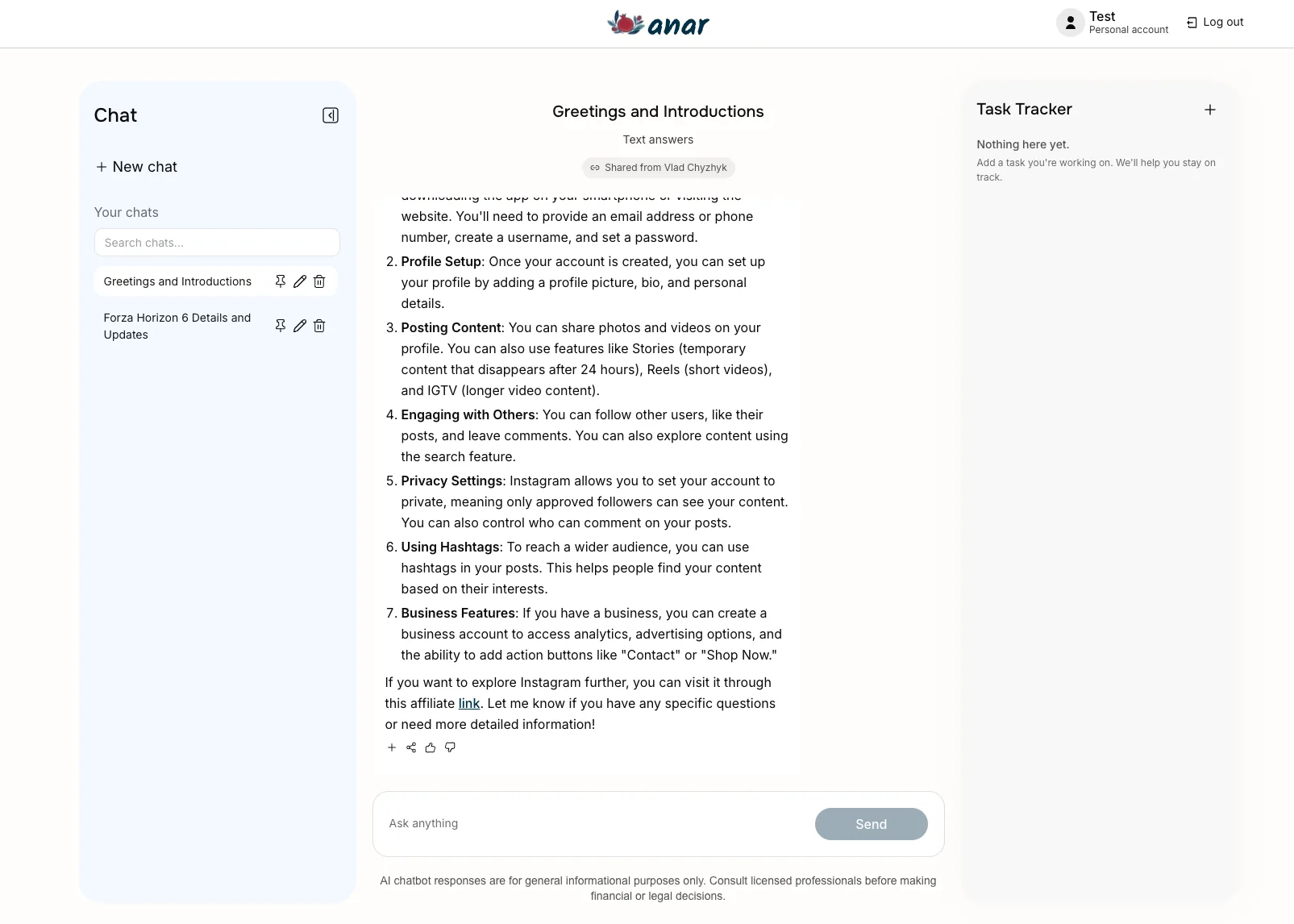
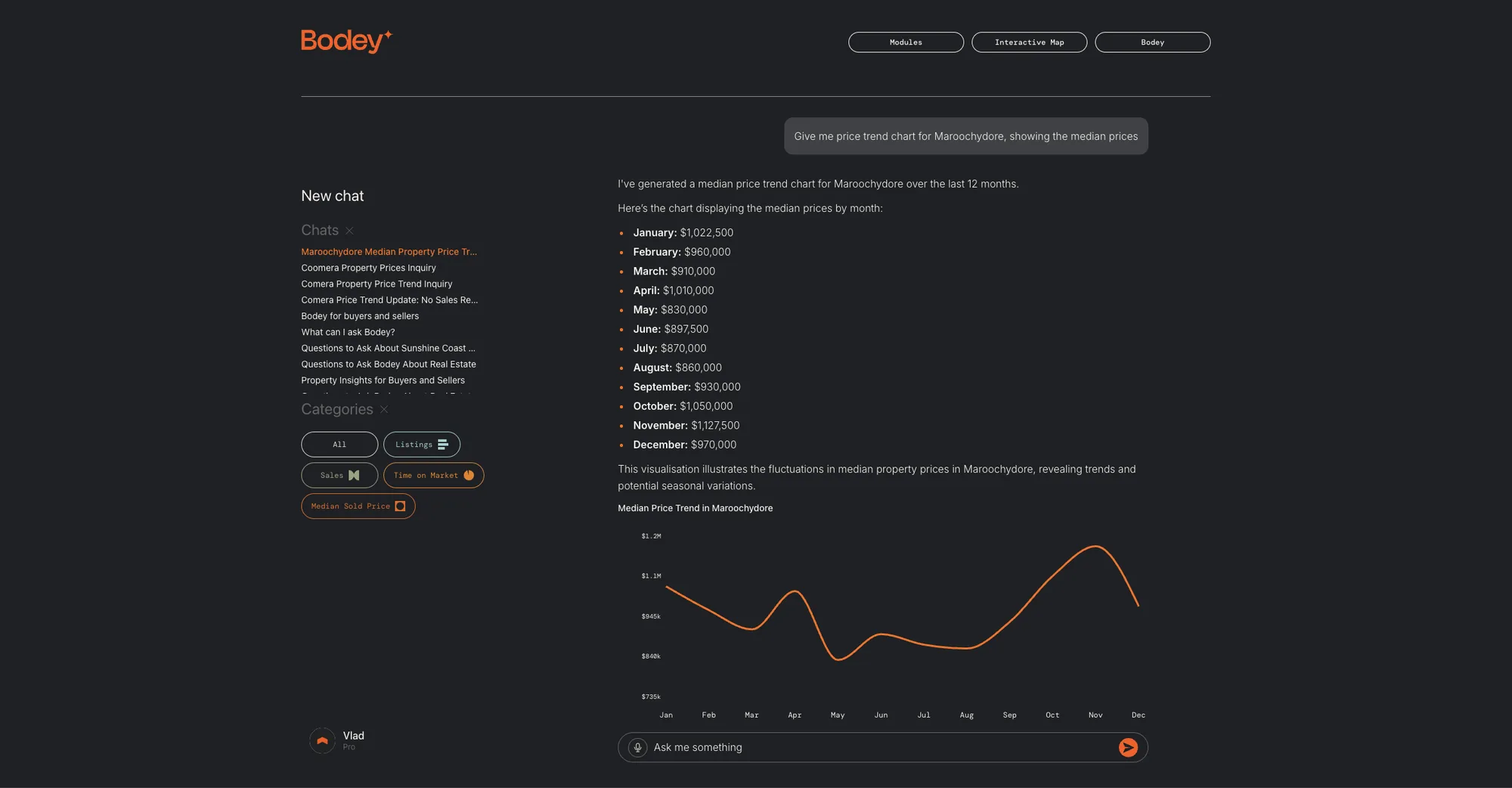
ArgoFetch Bodey AI chat answering a market trend question with an inline chart
The situation

What was in place before we started.

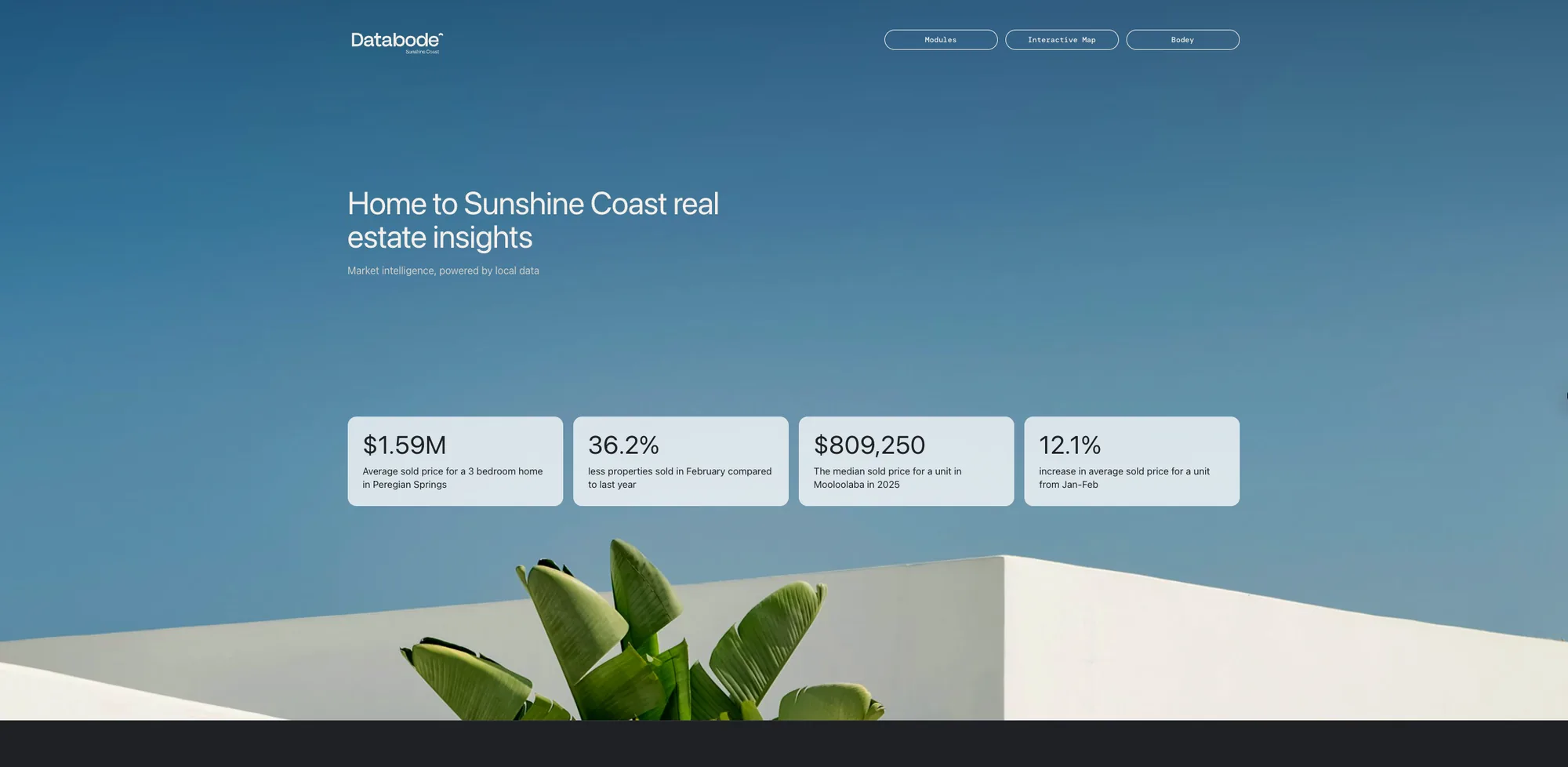
A production real-estate intelligence SaaS for the Sunshine Coast property market. Bodey — the on-platform AI assistant — answers natural-language questions about live sales, listings, and time-on-market data via a streaming tool-call pipeline, with Stripe billing, an operator admin panel, and an interactive property map.

ArgoFetch is a production real-estate intelligence platform built for the Sunshine Coast property market under the Databode brand. The platform serves real-estate agents and investors who need fast, reliable answers about local sales, listing volumes, price trends, and time-on-market data. The product's core is Bodey — an AI assistant that answers natural-language questions about property data using a live Supabase database, not pre-computed summaries.

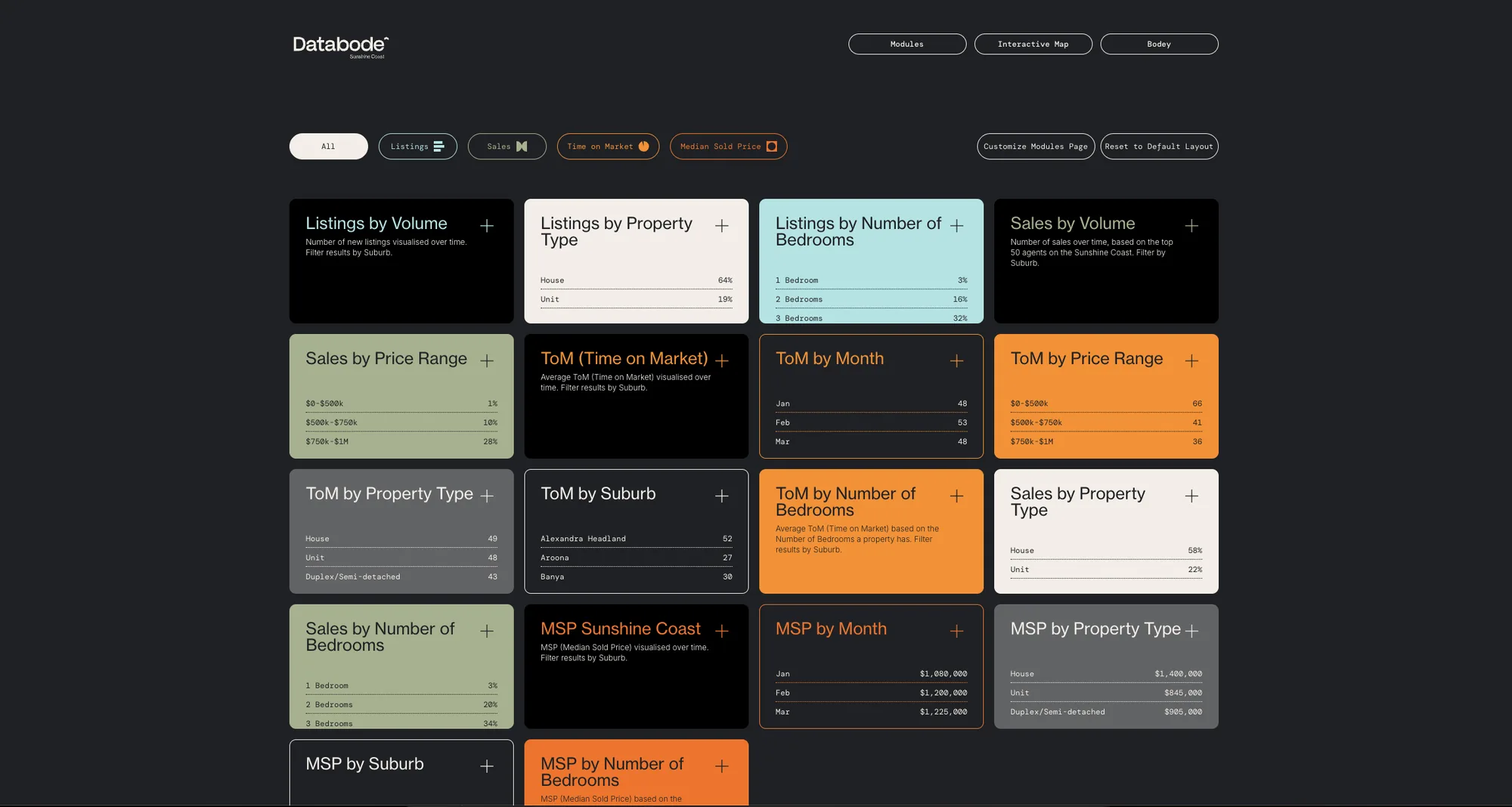
Bodey is sold as a SaaS product with tiered subscription plans, usage quotas, and an operator-facing admin panel. The system had to resolve natural-language timeframes precisely, enforce strict data attribution, and handle complex multi-tool queries in a single streaming response — all on top of complete SaaS infrastructure: tiered billing, per-user monthly quotas, a configurable operator admin, an interactive property map, and a module system that lets the operator change behaviour without code changes.

Constraint

Every Bodey answer had to be grounded in a live Supabase query executed during the stream — no pre-aggregated datasets, no generic market knowledge. Natural-language timeframes like "last financial year" or "Q3 2023" had to be resolved precisely before the tool calls fired.

Estimated Timeline
6 months
Estimated Team
5 people
Estimated Budget
$18k – $20k
Platforms
2
Stack
Next.js 16 (×2 apps)React 19Tailwind CSS v4TanStack Query v5Zustand v5GSAP 3Recharts 2Next.js Route HandlersEdge runtime (Bodey chat)Node.js runtimeSupabase Postgres + RLSSupabase Auth + SSR cookiesTypeScriptZod validationVercel Edge ConfigOpenAI GPT-4oVercel AI SDKStripe (tiered billing + quotas)Google Maps API
Delivery story

ArgoFetch: turning property data into confident decisions

01

Challenge

A production real-estate intelligence SaaS for the Sunshine Coast property market. The main delivery challenge was to give users large, changing datasets translated into quick searches and practical decisions, while keeping Bodey AI assistant, Five-tool data registry, and Inline chart generation consistent across the complete journey. We framed the engagement around the smallest production-worthy flow first, then expanded the scope without weakening the underlying component and data model.

02

How we built it

We began by mapping the user journey and the boundaries of the AI: what context it receives, what it may return, and where deterministic application logic must stay in control. We then built Bodey AI assistant, Five-tool data registry, and Inline chart generation as small end-to-end slices, connecting the interface to the data and model layers early so the team could test real responses instead of static mock-ups. Streaming and real-time states were treated as first-class UI states, including loading, partial output, retries, and recovery. The main implementation used Next.js 16 (×2 apps), React 19, Tailwind CSS v4, and TanStack Query v5, with typed contracts keeping the JavaScript stack consistent across the product.

03

Delivery

The delivered scope brought Bodey AI assistant, Five-tool data registry, Inline chart generation, and Interactive property map into one coherent production-ready product experience. Model output, product logic, and user feedback are separated clearly, which makes the AI easier to evaluate and evolve. For ArgoFetch, the practical result is a product that communicates its value quickly while giving the team a maintainable base for continued delivery in proptech.
Challenges

Each constraint, and what we did about it.

Constraint

Every Bodey answer had to be grounded in a live Supabase query executed during the stream — no pre-aggregated datasets, no generic market knowledge. Natural-language timeframes like "last financial year" or "Q3 2023" had to be resolved precisely before the tool calls fired.

What we did

Two Next.js 16 applications share a single Supabase Postgres instance — the customer platform and the operator dashboard — communicating through Supabase Auth with SSR cookies and Bearer-token API access. The Bodey chat endpoint runs on Edge runtime to keep streaming latency near zero; every other Route Handler runs on Node.js, where the seven-stage pipeline (auth, session, prompt assembly, tool registry, tool execution, post-stream cleanup, accounting) lives.

Results

Measured outcomes.

7
Pipeline stages per Bodey request, from auth to post-stream accounting
5
Zod-typed tools live-querying Supabase during a single streaming response
2
Linked Next.js apps sharing one Supabase instance — platform + operator dashboard
Showcase

How the system fits together.

4 of 5 views
argofetch-ai-property-intelligence.example
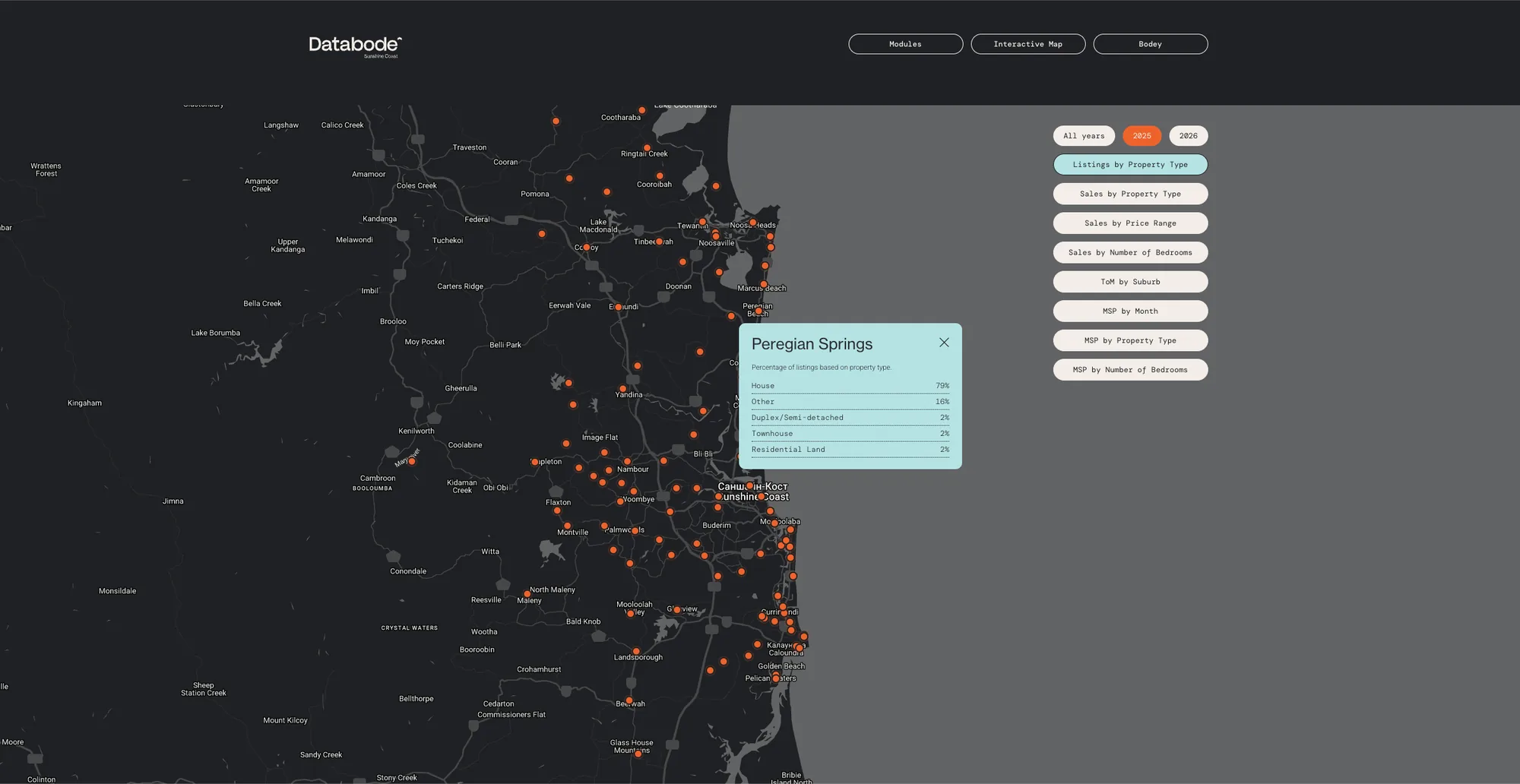
ArgoFetch interactive property map with a Peregian Springs property tooltip
argofetch-ai-property-intelligence.example
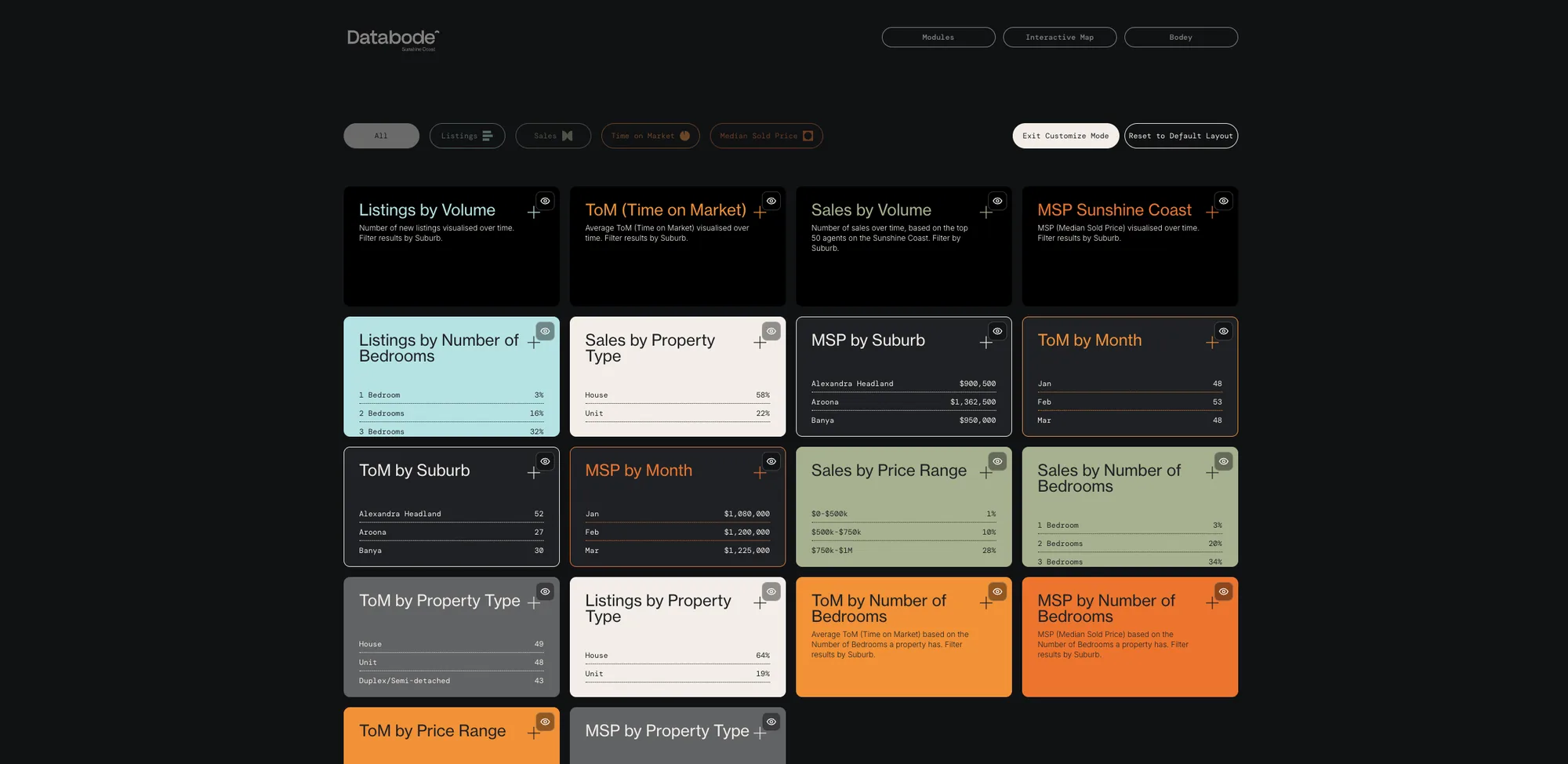
ArgoFetch operator dashboard of drag-and-drop analytics modules
argofetch-ai-property-intelligence.example
ArgoFetch — product screenshot
argofetch-ai-property-intelligence.example
ArgoFetch — product screenshot
Roadmap

Estimated delivery sequence.

6 months
Weeks 1–4

Discovery & architecture

Streaming chat over OpenAI GPT-4o via the Vercel AI SDK, with five Zod-typed tools running live Supabase queries mid-response — enabling chained reasoning and multi-step analysis without leaving the stream.

  • Bodey AI assistant
Weeks 5–14

Core build

analyzeSales, analyzeListings, analyzeMatchedListings, buildChartSpec, and getDataSourceInfo — each a typed contract over the live property dataset, with a timeframe resolver mapping phrases like "las

  • Five-tool data registry
Weeks 15–20

Integrations & data

buildChartSpec returns Recharts-compatible visualisation specs that render inline after the response completes — so chart metadata is extracted from the stream and hydrated client-side without a second roundtrip.

  • Inline chart generation
Weeks 21–26

Hardening & QA

Google Maps API integration with property pins, suburb overlays, and a configurable analytics module system — operators can drag, drop and reconfigure dashboard layouts without redeployment.

  • Interactive property map
Week 27

Launch & handover

Tiered subscription plans with per-user monthly prompt quotas enforced at the auth stage of every Bodey request — immediate rejection if exhausted, no wasted tokens.

  • Stripe billing + quotas

More work like this.

Every case study covers a product Coralsoft designed, built, and shipped for a client.