Social & Community · Est. $18k – $20k
Calido

caleido.ai · consumer social PWA

Coralsoft designed, built and shipped this product for the client.

MobileWebBackendNext.js 15 + React 18Redux Toolkit + RTK QueryTailwind CSS
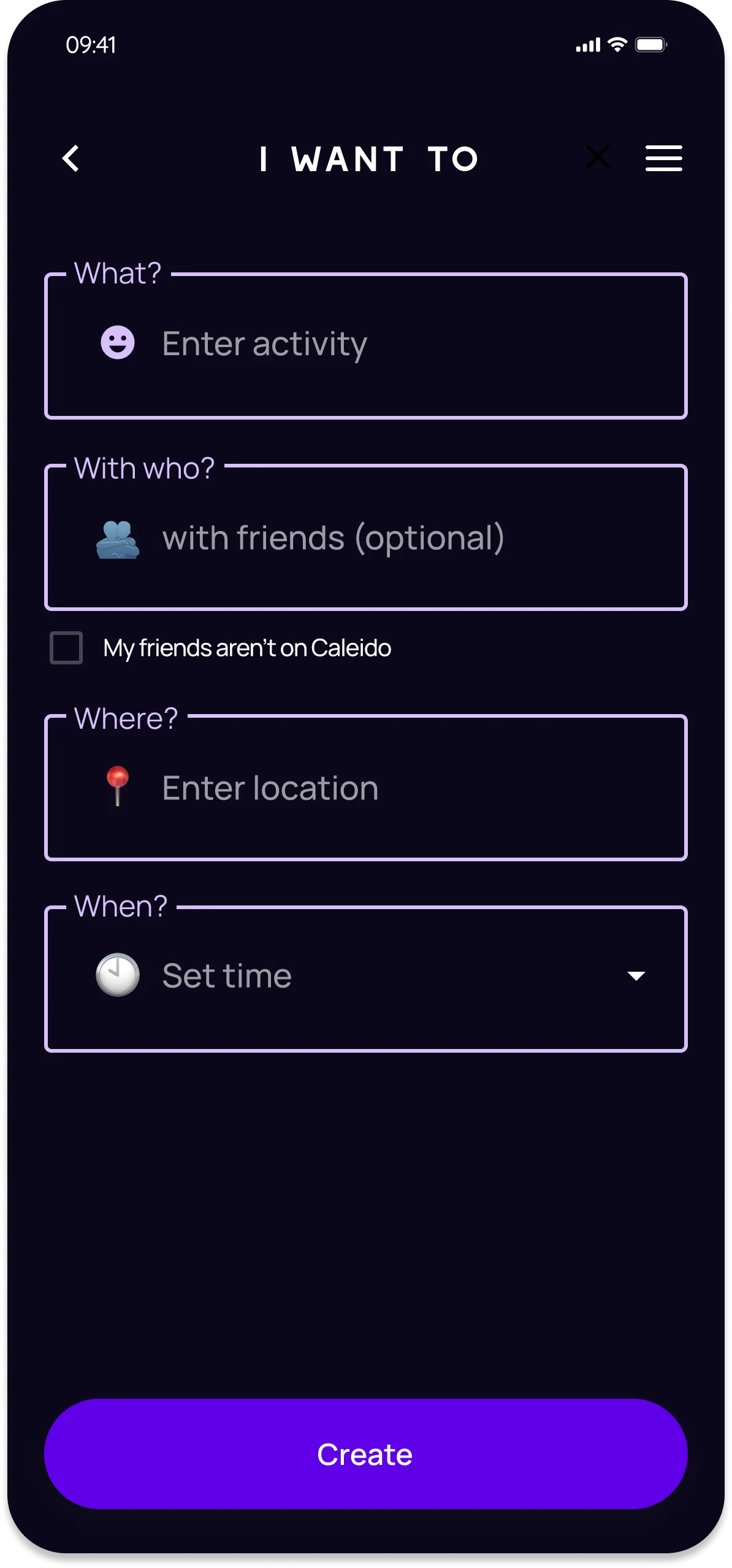
Calido event creation flow with activity, attendees, location and time fields
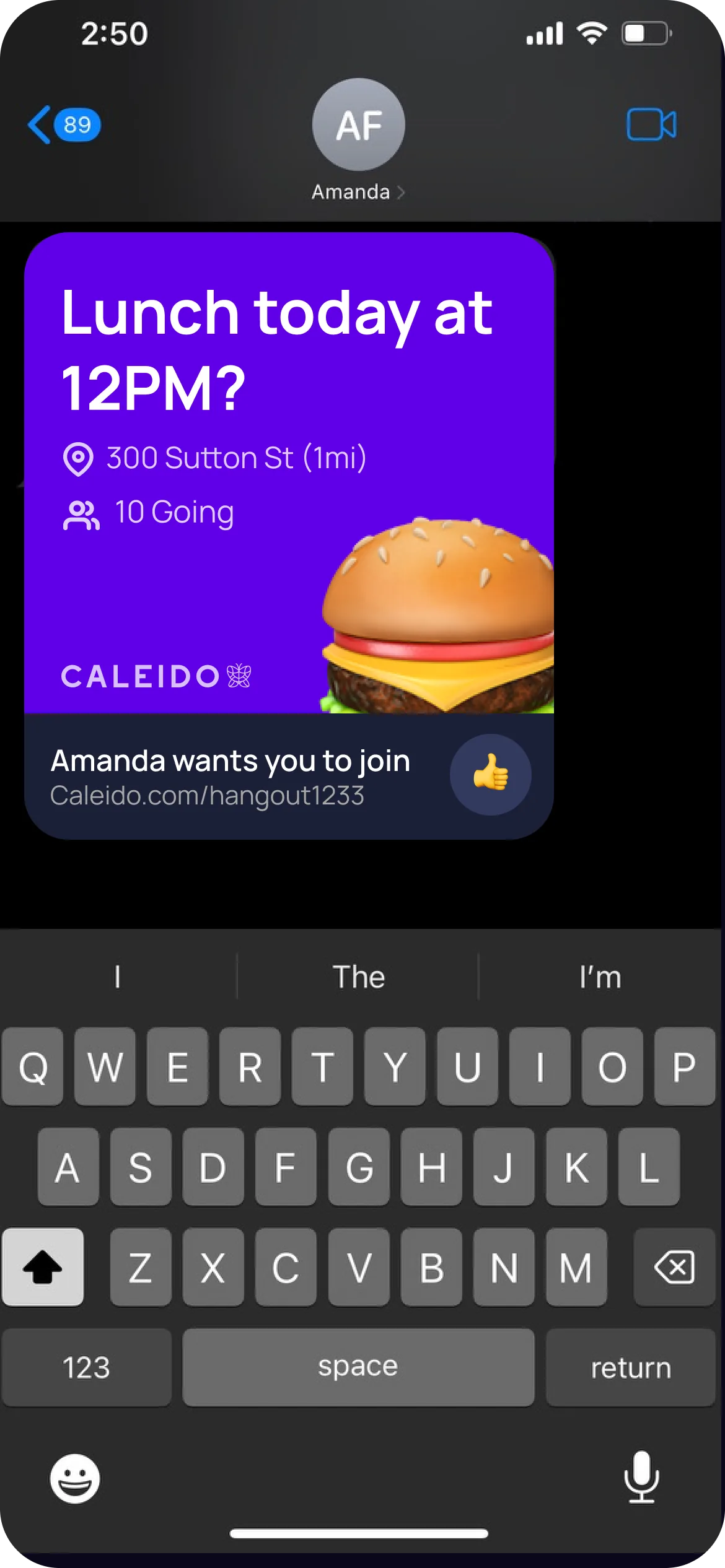
Calido shareable invite rendered as a branded iMessage preview
The situation

What was in place before we started.

A social hangout coordination app rescued from an incomplete, fragile codebase — stabilised, completed, and shipped to production by Coralsoft with a flagship AI planning assistant at its core.

Calido helps friends turn we should hang out into an actual plan — pick an activity, choose a place, invite people, and send it. The product targets the coordination friction that kills spontaneous social plans: too many messages, no agreed time, invites that disappear into chats.

When Coralsoft took over the project, the previous vendor had left behind an unfinished MVP with significant technical debt. Core flows were broken or inconsistent, integrations were half-built, and the codebase was difficult to extend. The client needed a reliable product in users' hands — without the time or budget for a full greenfield rewrite.

Constraint

The mandate was threefold: stabilise what existed, complete the remaining MVP scope, and deliver a differentiated feature — an AI assistant for natural-language hangout planning — that would justify the product's position in the market.

Estimated Timeline
8 months
Estimated Team
6 people
Estimated Budget
$18k – $20k
Platforms
3
Stack
Next.js 15 + React 18Redux Toolkit + RTK QueryTailwind CSSRadix UIFramer MotionReact Hook Form + Zodnext-pwa + WorkboxTypeScriptGoogle Maps JS APIFirebase FCMWeb Push APITwilio (SMS, via backend)libphonenumber-jsGoogle Analytics 4
Delivery story

Calido: designing participation into the core product

01

Challenge

A social hangout coordination app rescued from an incomplete, fragile codebase — stabilised, completed, and shipped to production by Coralsoft with a flagship AI planning assistant at its core. The main delivery challenge was to give users low-friction creation and interaction without losing the feeling of a live community, while keeping AI hangout assistant, Event lifecycle, and Google Places integration consistent across the complete journey. We framed the engagement around the smallest production-worthy flow first, then expanded the scope without weakening the underlying component and data model.

02

How we built it

We began with the page hierarchy, content priorities, and the conversion path, then translated those decisions into reusable layout and style primitives. The team delivered AI hangout assistant, Event lifecycle, and Google Places integration in reviewable sections, checking responsive behaviour, content editing, forms, and browser edge cases before final polish. The build used Next.js 15 + React 18, Redux Toolkit + RTK Query, Tailwind CSS, and Radix UI, with the structure kept simple enough for the client team to maintain after handoff.

03

Delivery

The delivered scope brought AI hangout assistant, Event lifecycle, Google Places integration, and Push + SMS notifications into one coherent production-ready product experience. Model output, product logic, and user feedback are separated clearly, which makes the AI easier to evaluate and evolve. For Calido, the practical result is a product that communicates its value quickly while giving the team a maintainable base for continued delivery in social & community.
Challenges

Each constraint, and what we did about it.

Constraint

The mandate was threefold: stabilise what existed, complete the remaining MVP scope, and deliver a differentiated feature — an AI assistant for natural-language hangout planning — that would justify the product's position in the market.

What we did

The frontend is organised by feature domains under Next.js 15 App Router. State management uses Redux Toolkit with multiple RTK Query slices — events, AI chat, calendar, public events, auth — sharing JWT bearer headers and cache invalidation tags. This keeps server data in sync after mutations without manual refresh logic.

Results

Measured outcomes.

7
Structured AI response types rendered as rich UI, not text walls
3
Notification channels built — push, web push, SMS
0→1
Broken MVP rescued to a shippable production product
Roadmap

Estimated delivery sequence.

8 months
Months 1–2

Discovery & architecture

Users describe what they want in natural language; the backend returns structured content blocks — time suggestions, location cards, contact recommendations, a review card and a share link — rendered

  • AI hangout assistant
Months 3–4

Core build

Three timing modes: now (spontaneous), later (scheduled), and find time (poll).

  • Event lifecycle
Months 5–6

Integrations & data

Reusable autocomplete hook with debounced search, Places Autocomplete Service, and Details API — used across event creation, AI location cards, and city suggestion flows without redundant SDK initialisation.

  • Google Places integration
Month 7

Hardening & QA

Firebase FCM for in-app messaging hooks, Web Push via a dedicated service worker with full subscription lifecycle, and SMS invite/reminder flows via backend Twilio integration.

  • Push + SMS notifications
Month 8

Launch & handover

Public web links let anyone RSVP without an account.

  • Shareable invite links

More work like this.

Every case study covers a product Coralsoft designed, built, and shipped for a client.