01
Challenge
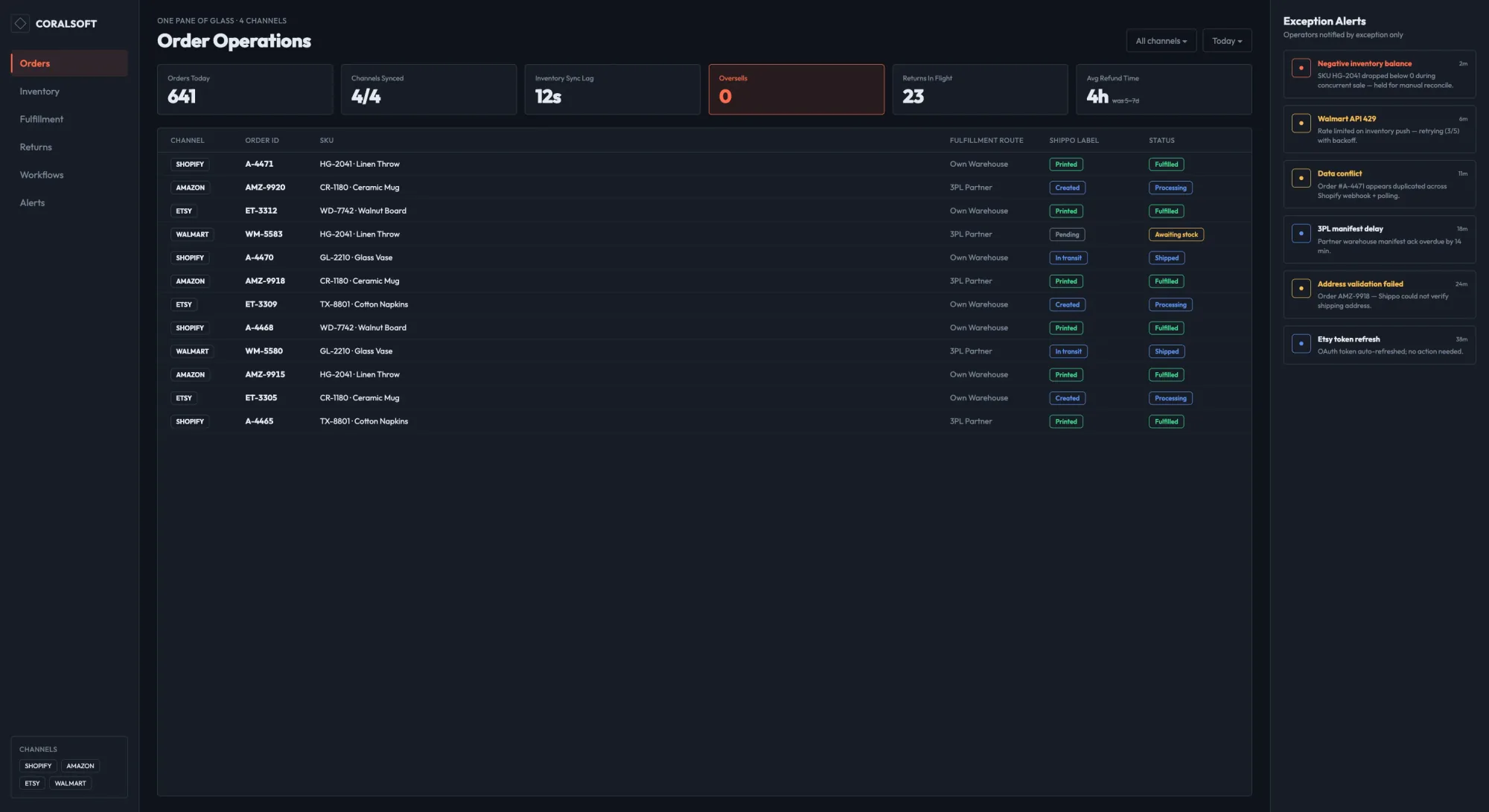
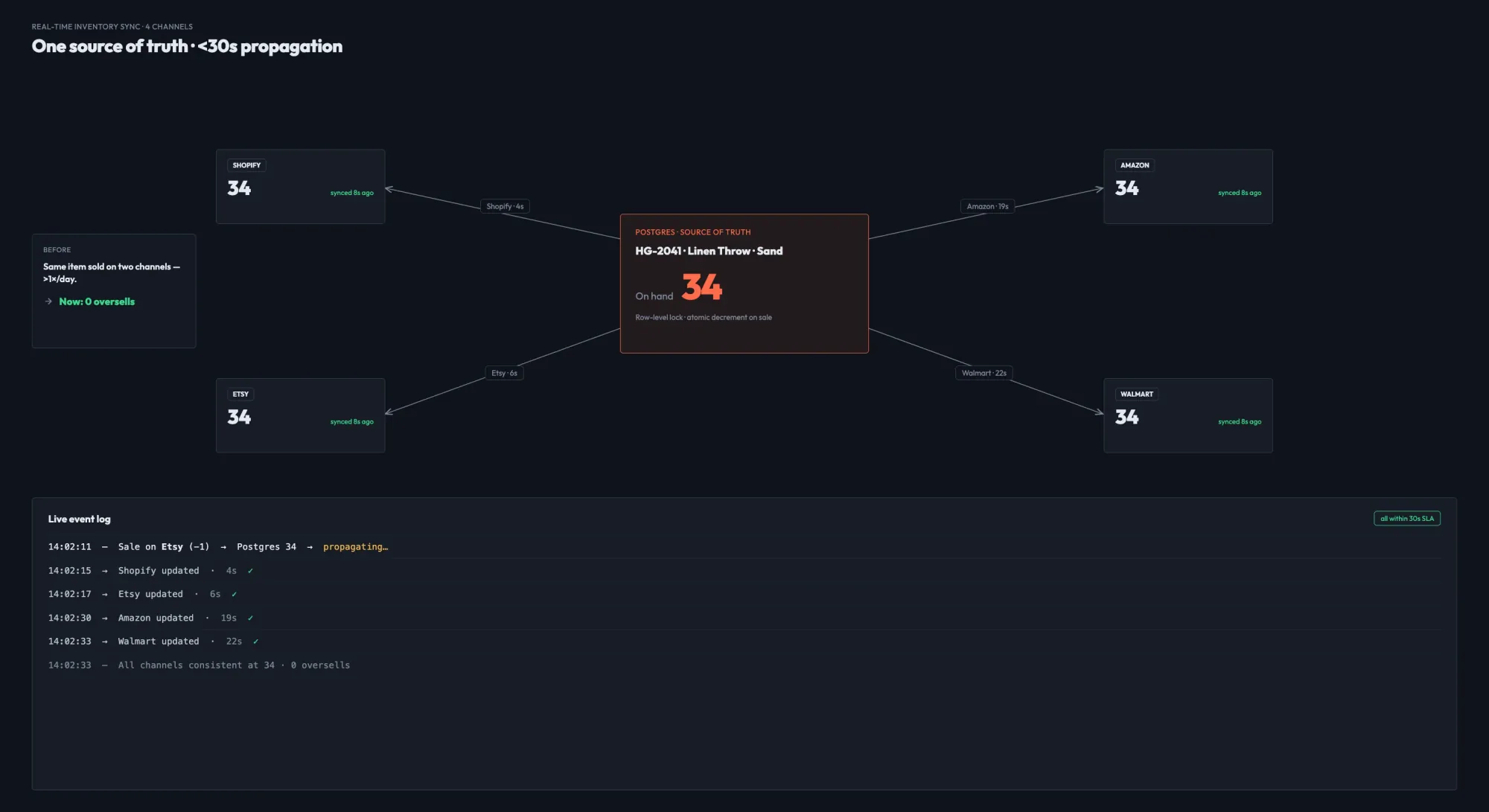
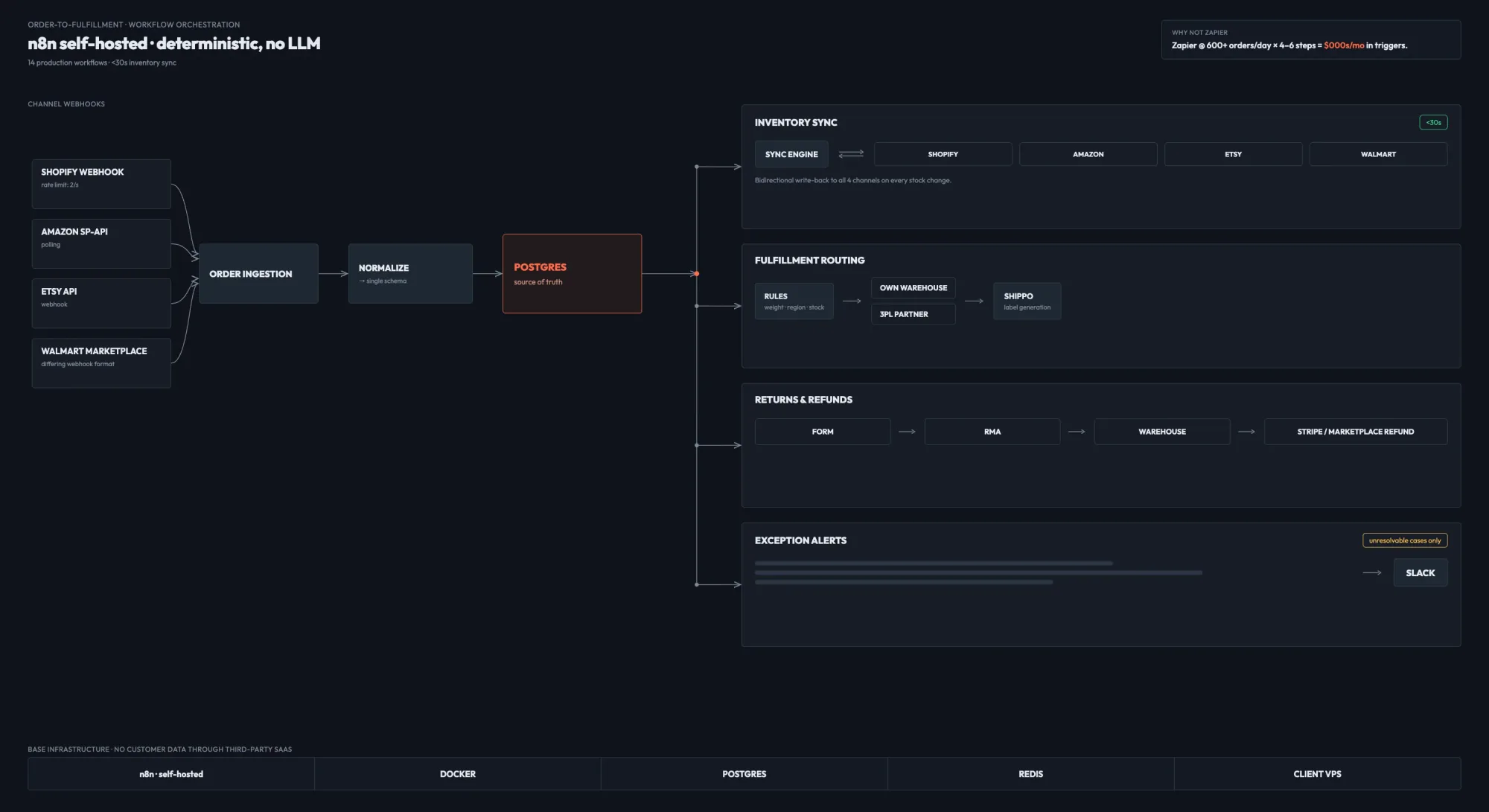
Workflow automation on n8n (self-hosted), no LLM agent — deterministic process orchestration that replaced four disconnected order, inventory, fulfillment, and returns processes for a DTC home-goods brand selling across Shopify and three marketplaces. The main delivery challenge was to give users a maintainable interface and architecture that could absorb new requirements without slowing delivery, while keeping Order ingestion, Inventory sync, and Fulfillment routing consistent across the complete journey. We framed the engagement around the smallest production-worthy flow first, then expanded the scope without weakening the underlying component and data model.
02
How we built it
We first separated the core product rules from external services, then defined typed boundaries for every integration. The team delivered Order ingestion, Inventory sync, and Fulfillment routing as end-to-end flows, adding retries, idempotent operations, validation, and observable failure states before polishing the interface. This kept third-party behaviour from leaking into the product experience and made later integrations easier to add. The implementation was anchored by n8n (self-hosted), Docker, Postgres, and Redis, with shared TypeScript contracts across the frontend and service layer.
03
Delivery
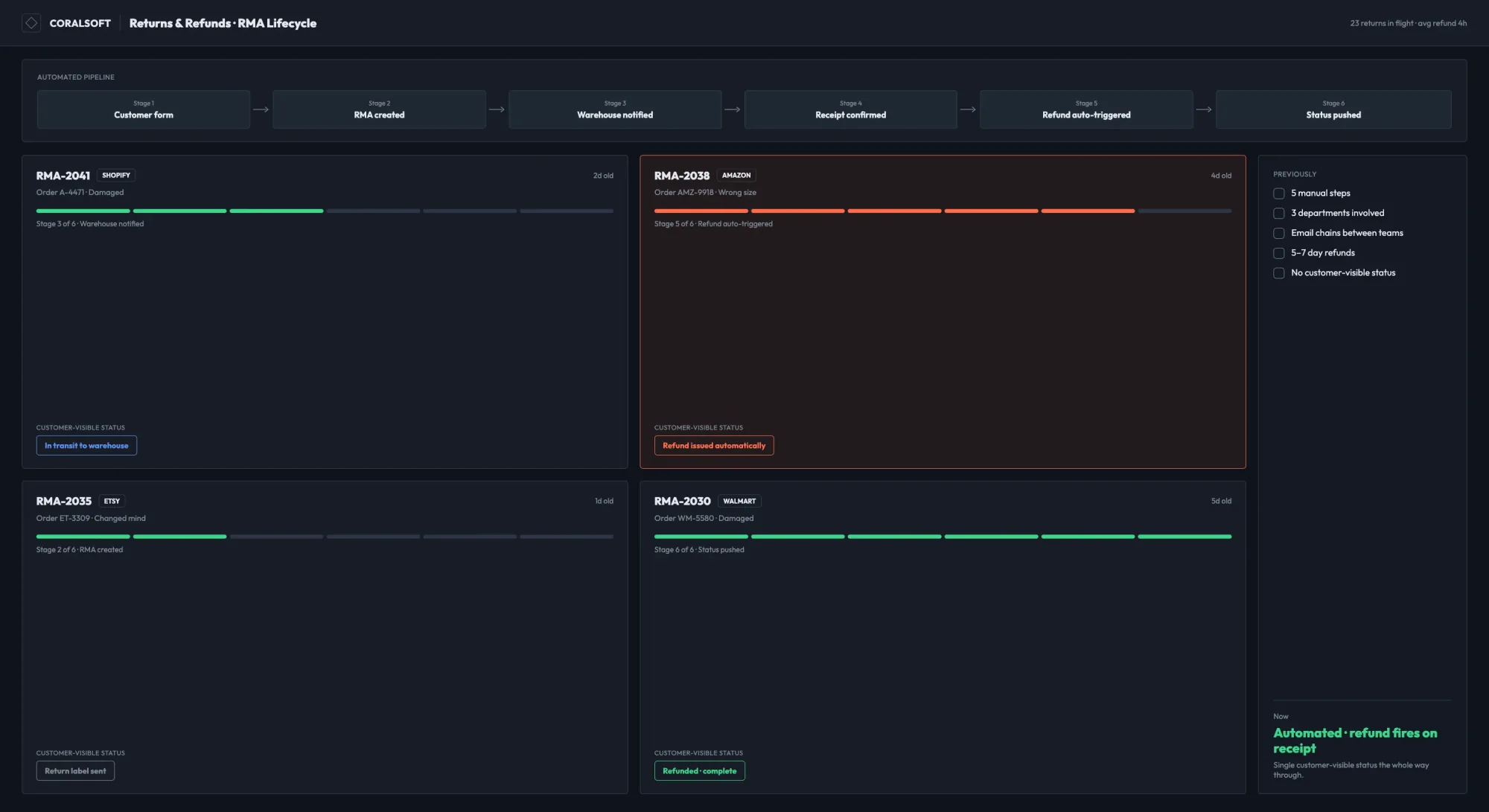
The delivered scope brought Order ingestion, Inventory sync, Fulfillment routing, and Returns & refunds into one coherent production-ready product experience. The reusable component and data patterns leave a clear route for the next product iteration. For Larkfield Goods, the practical result is a product that communicates its value quickly while giving the team a maintainable base for continued delivery in saas & infrastructure.